Case Study
Project Overview
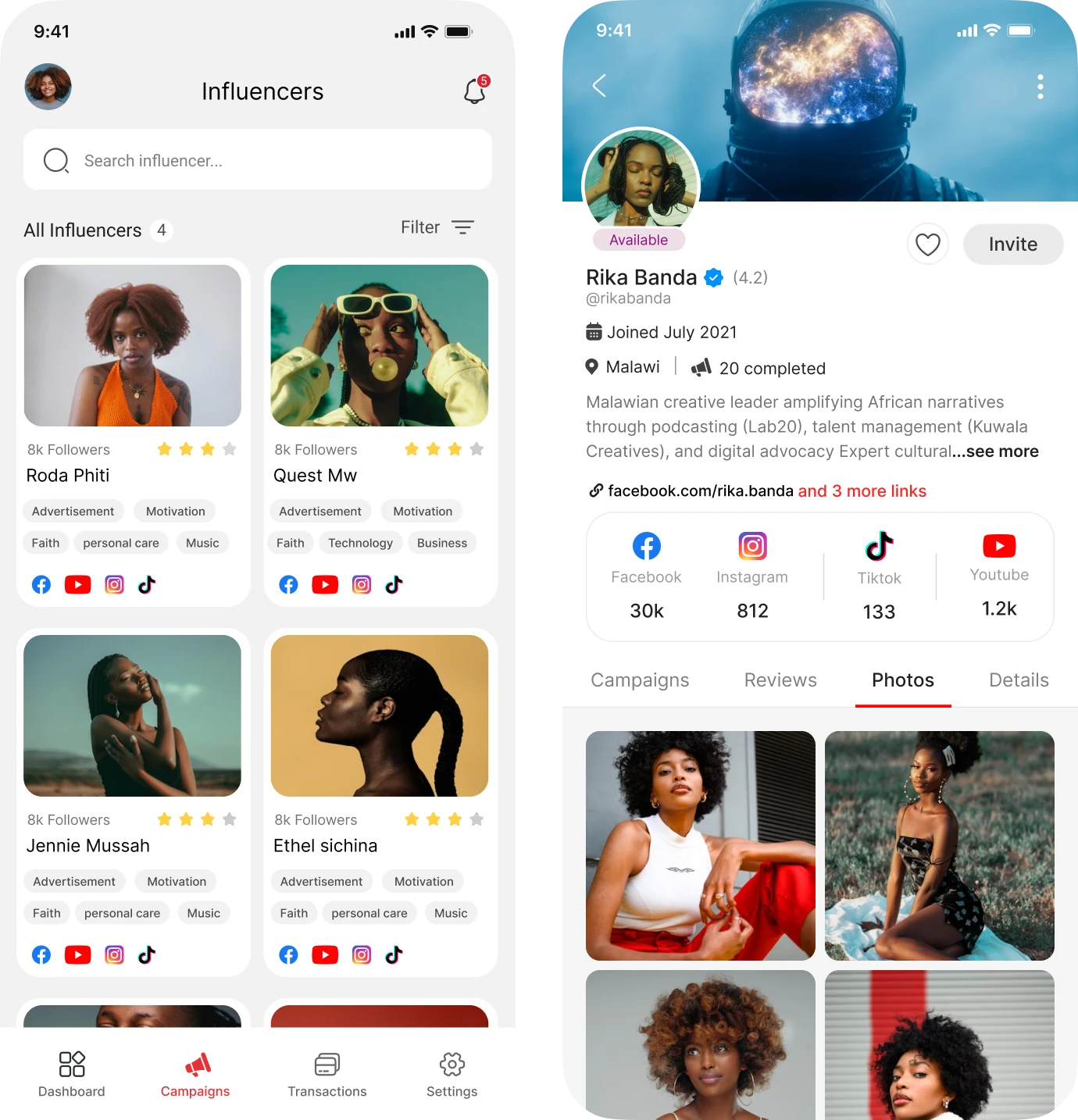
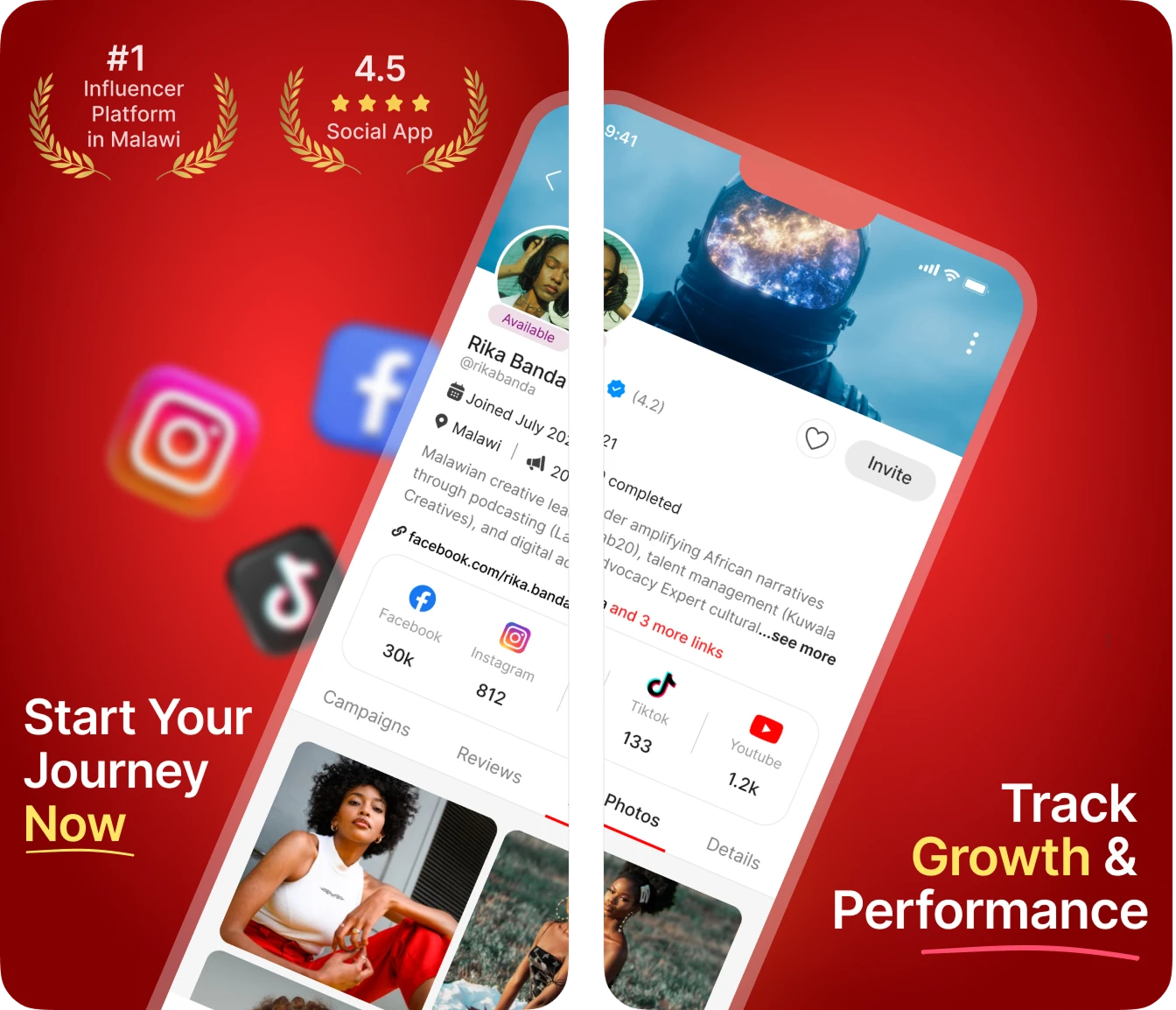
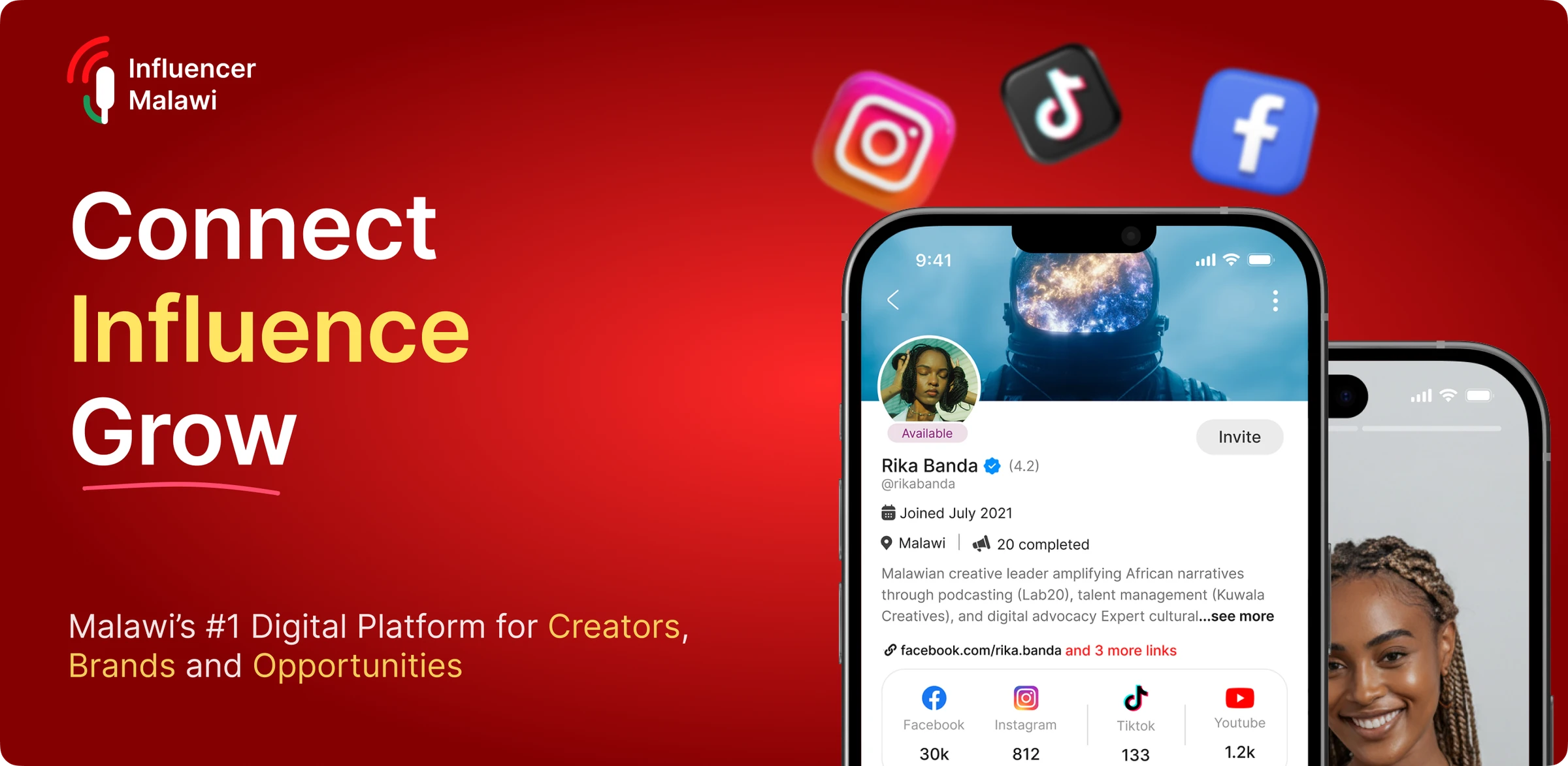
Influencer Malawi is a digital marketplace designed to connect Malawian influencers, creators, brands, businesses, churches, musicians, event organizers, and agencies in one platform. Influencers can create professional profiles, discover campaigns, apply for paid opportunities, receive payments, and showcase their social media reach.
On the other side, brands can create campaigns, find suitable influencers, review creator profiles, and manage marketing collaborations more easily. The goal is to make influencer marketing in Malawi more structured, accessible, measurable, and trusted.
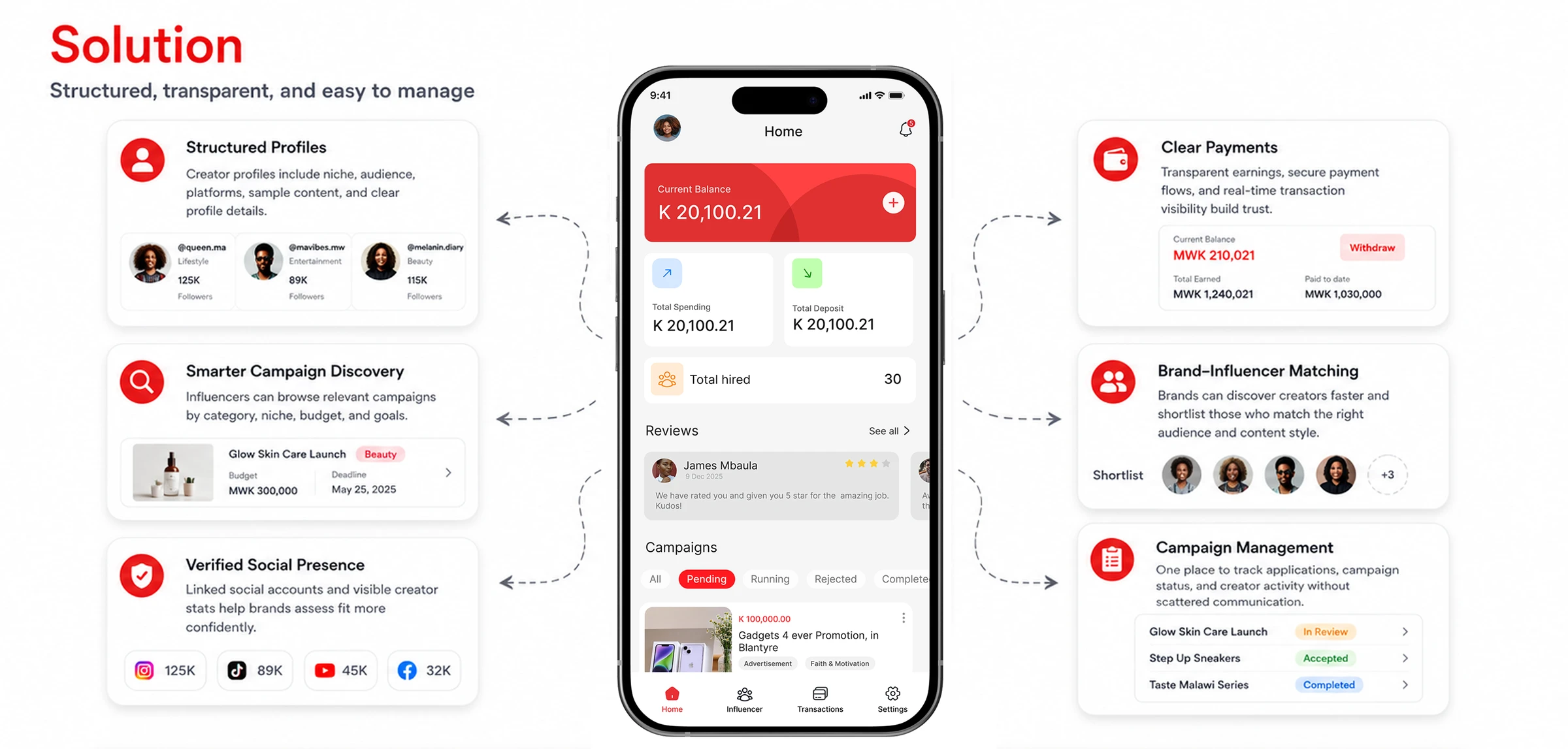
Platform overview — connecting creators and brands
Product Type
Mobile app & Marketplace platform — serving two main user groups:
- Influencers / Creators — users who want to get discovered, apply for campaigns, promote brands, and earn income through their audience and content.
- Brands / Businesses — users who want to run campaigns, find influencers, promote products or services, and track collaboration opportunities.
My Role
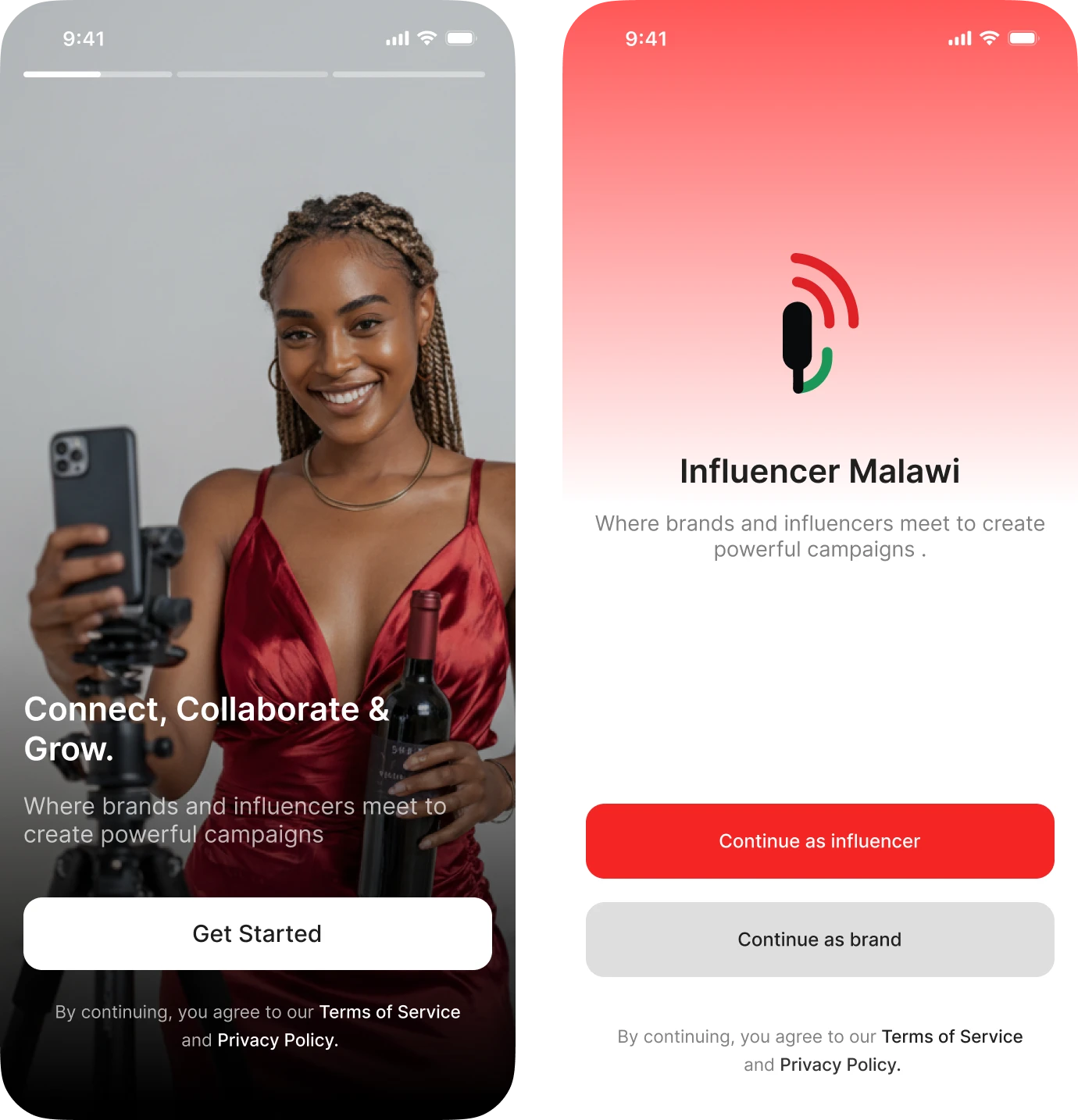
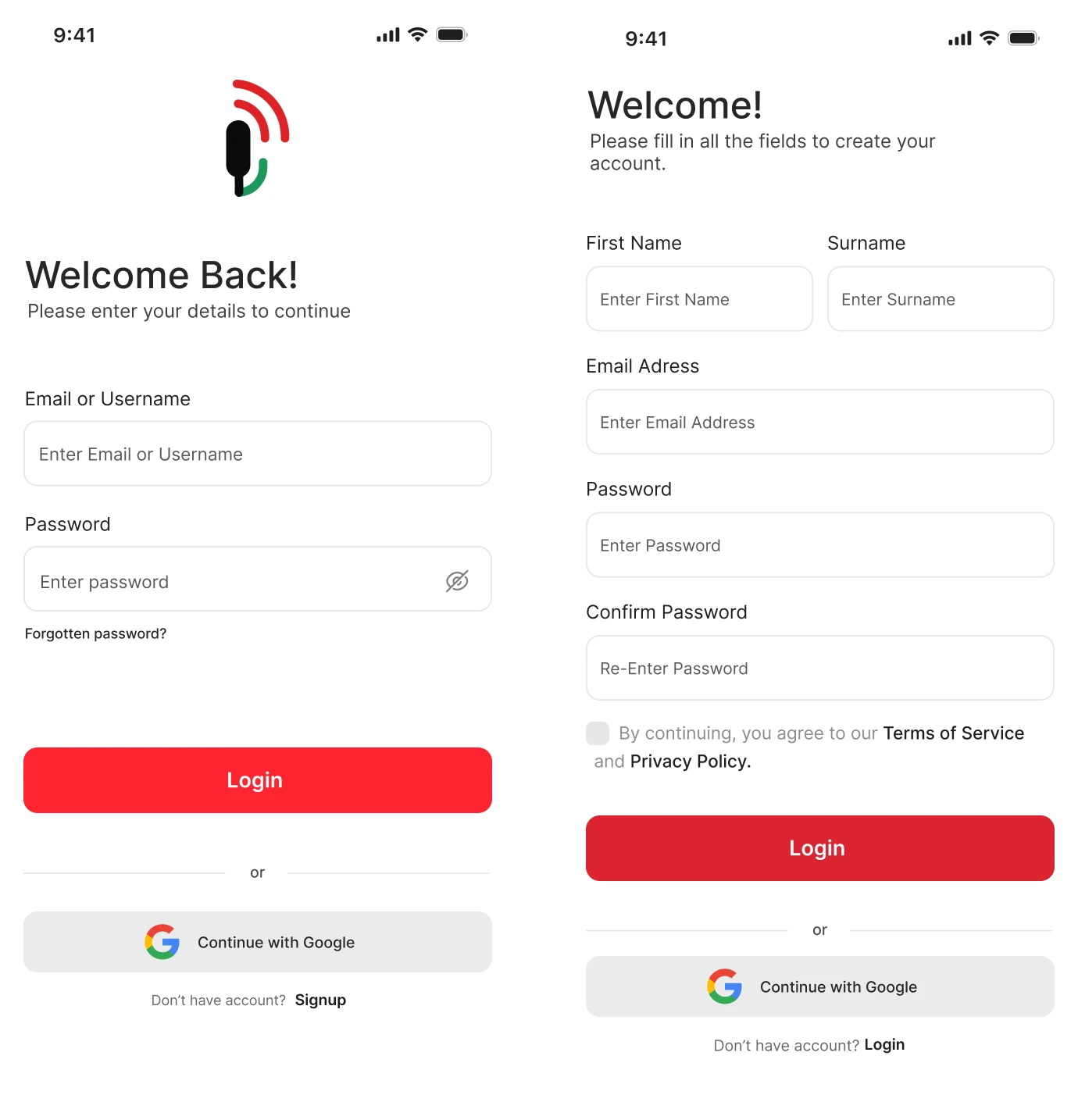
I worked on the product design direction and user experience of the app — shaping the app structure, defining key user flows, creating the visual interface, designing onboarding screens, and organizing core features around the needs of both influencers and brands.
Responsibilities included:
- Designing the full mobile app interface and visual system.
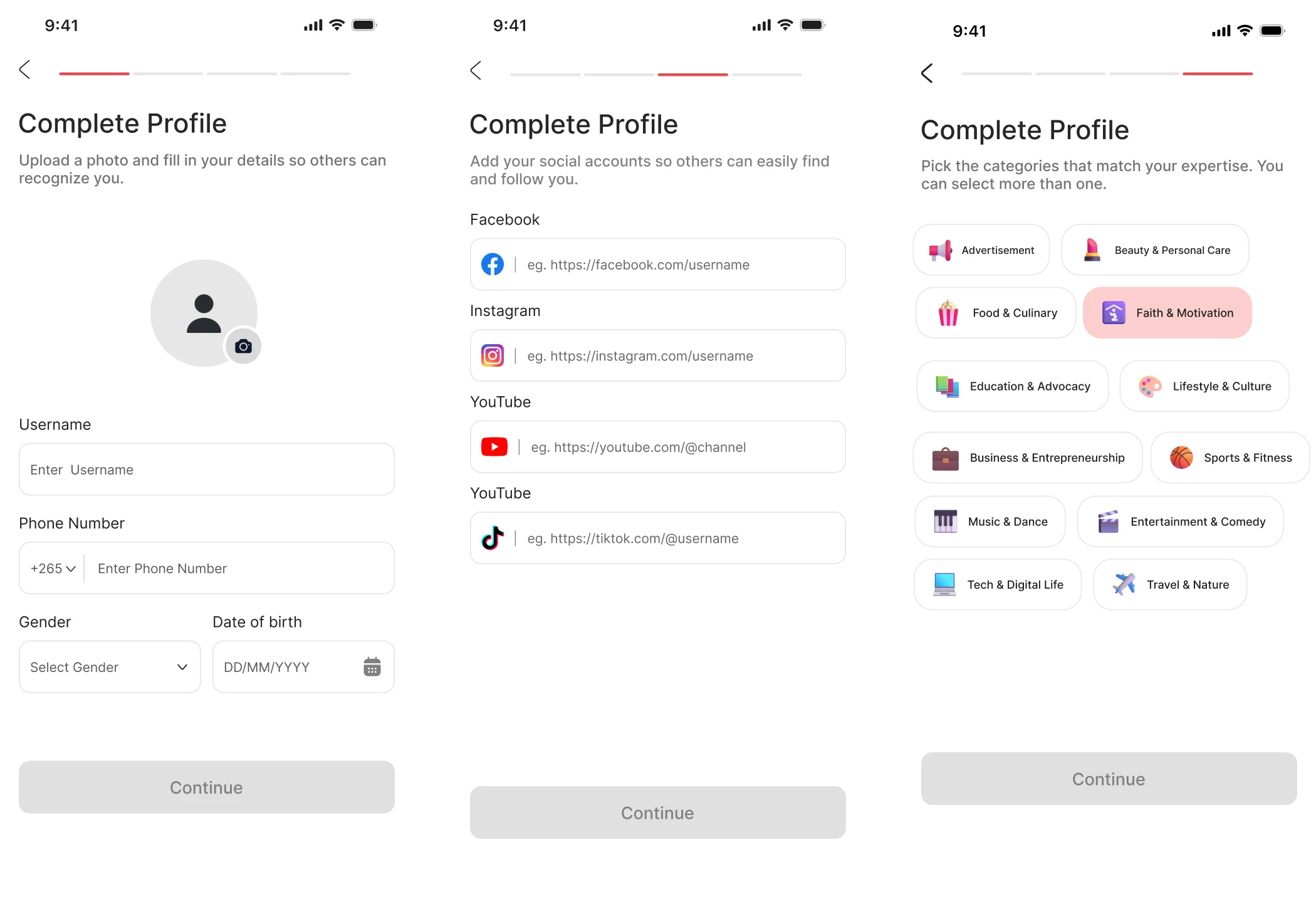
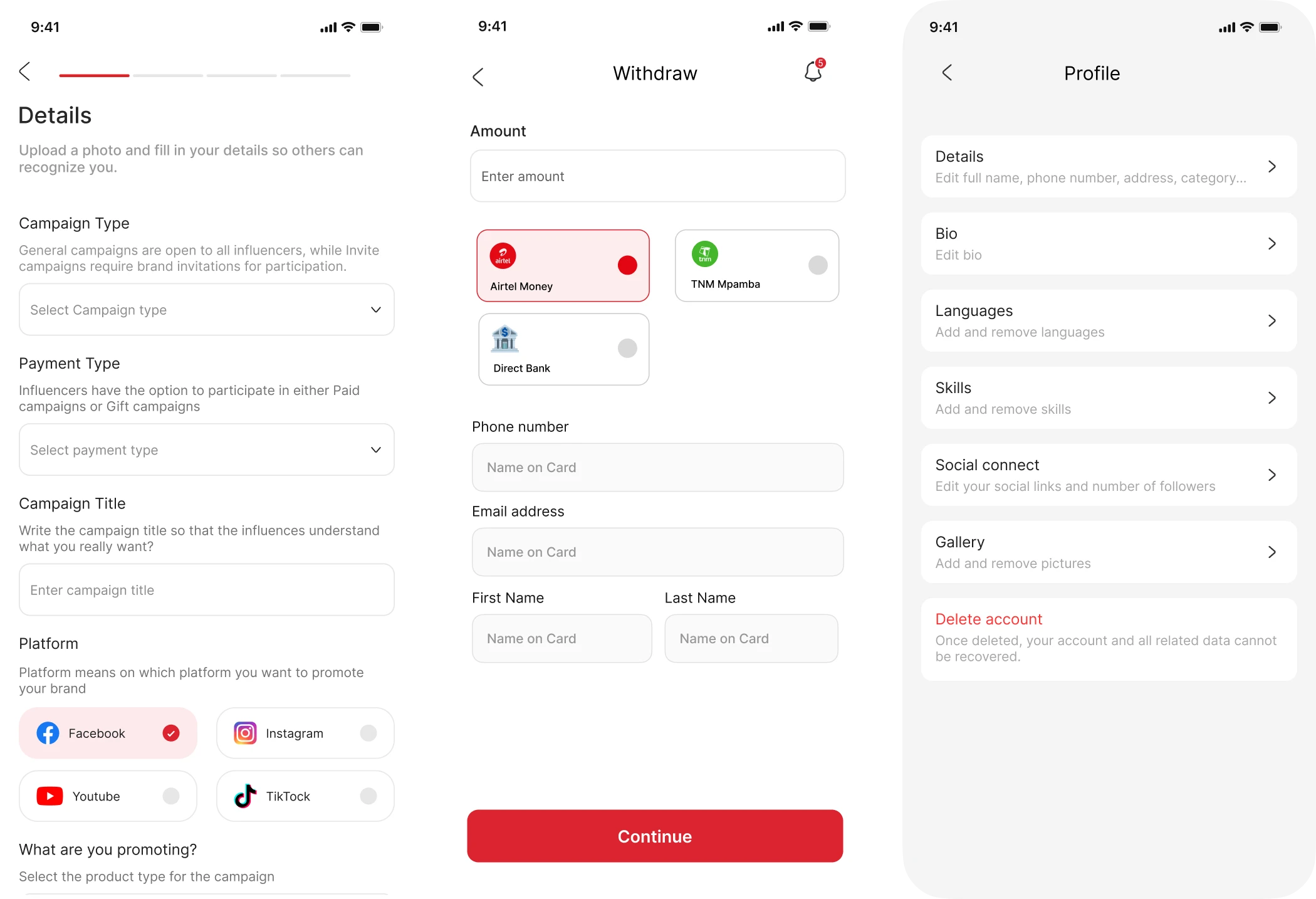
- Creating the influencer onboarding and profile completion flow.
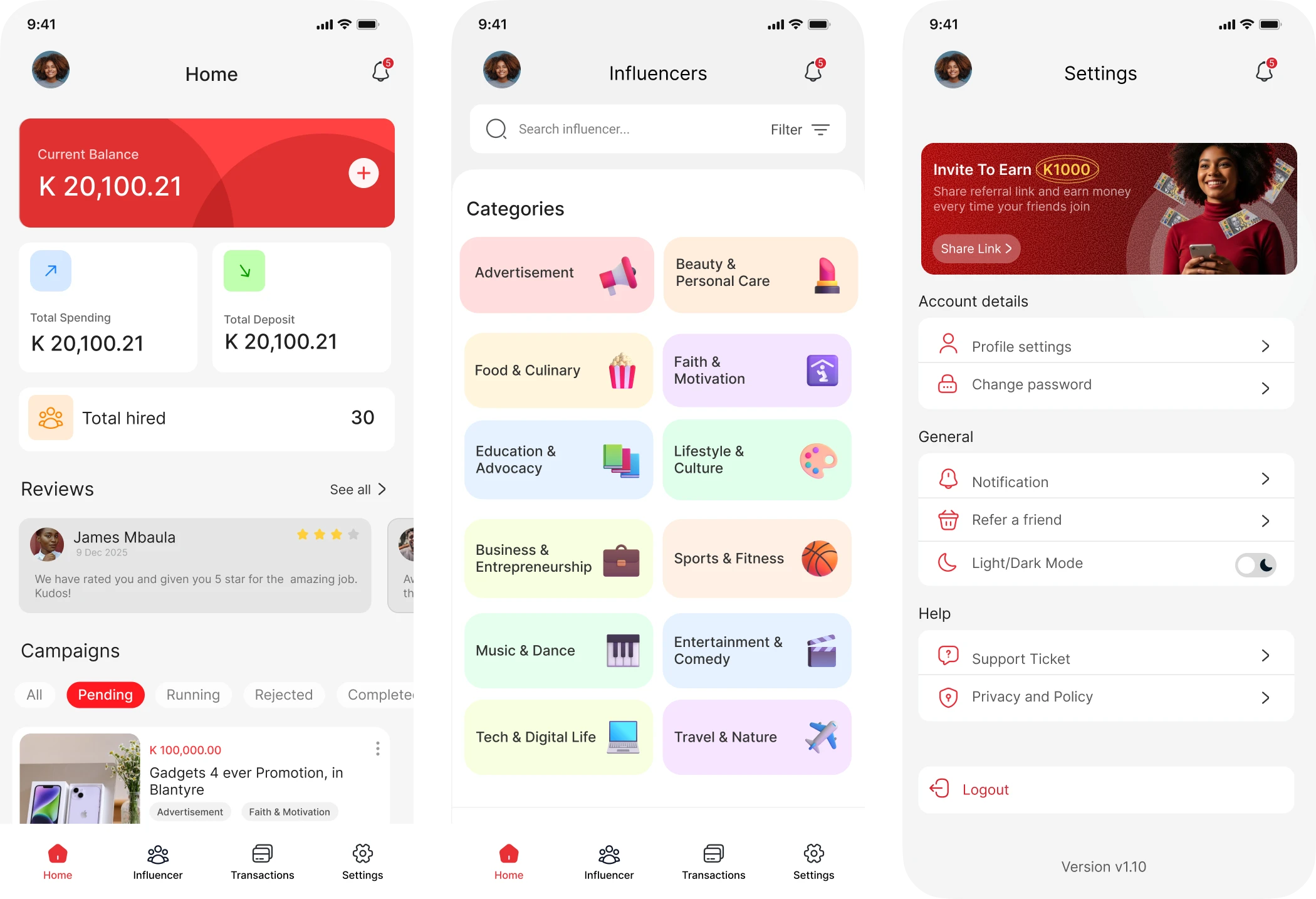
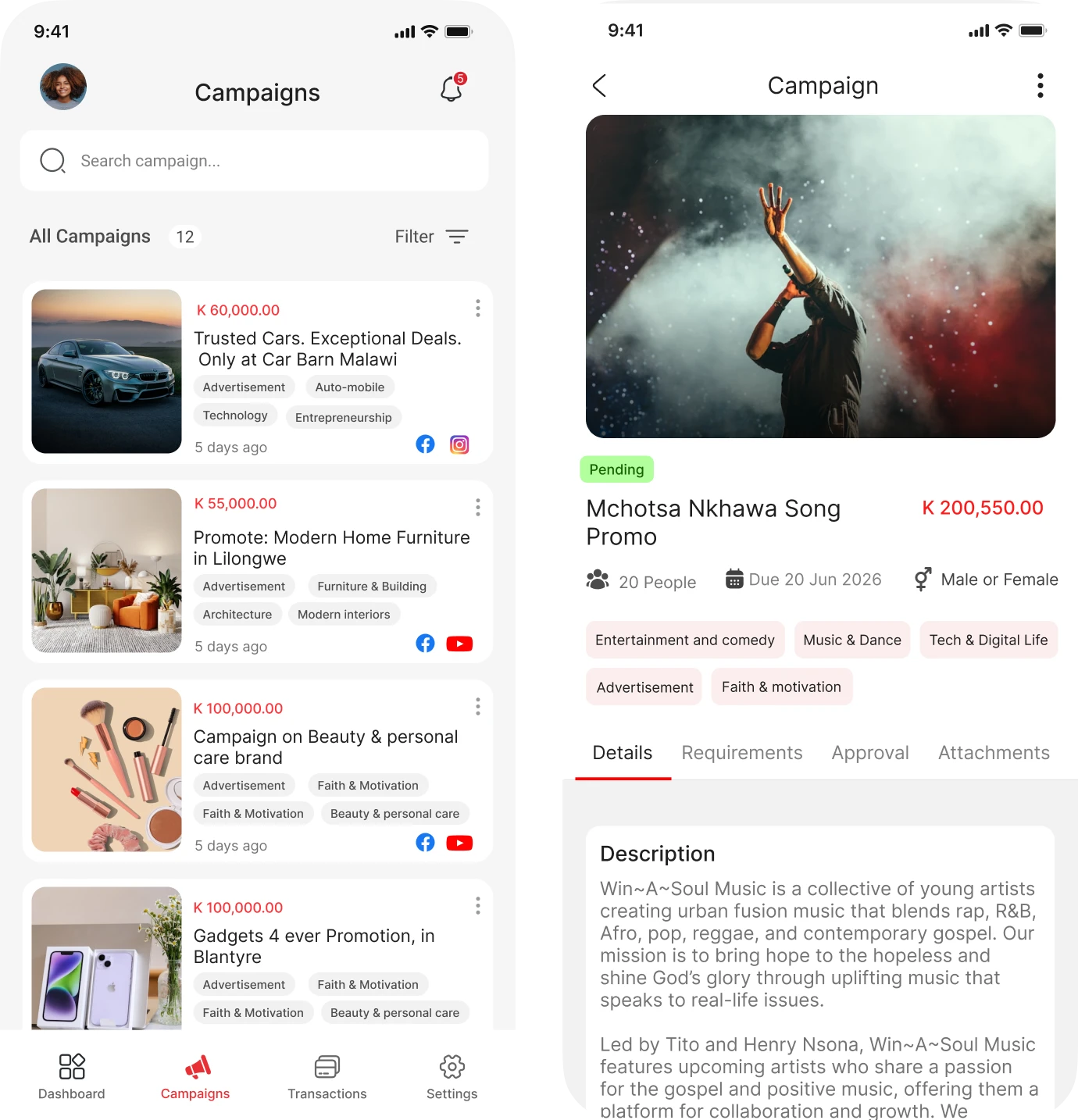
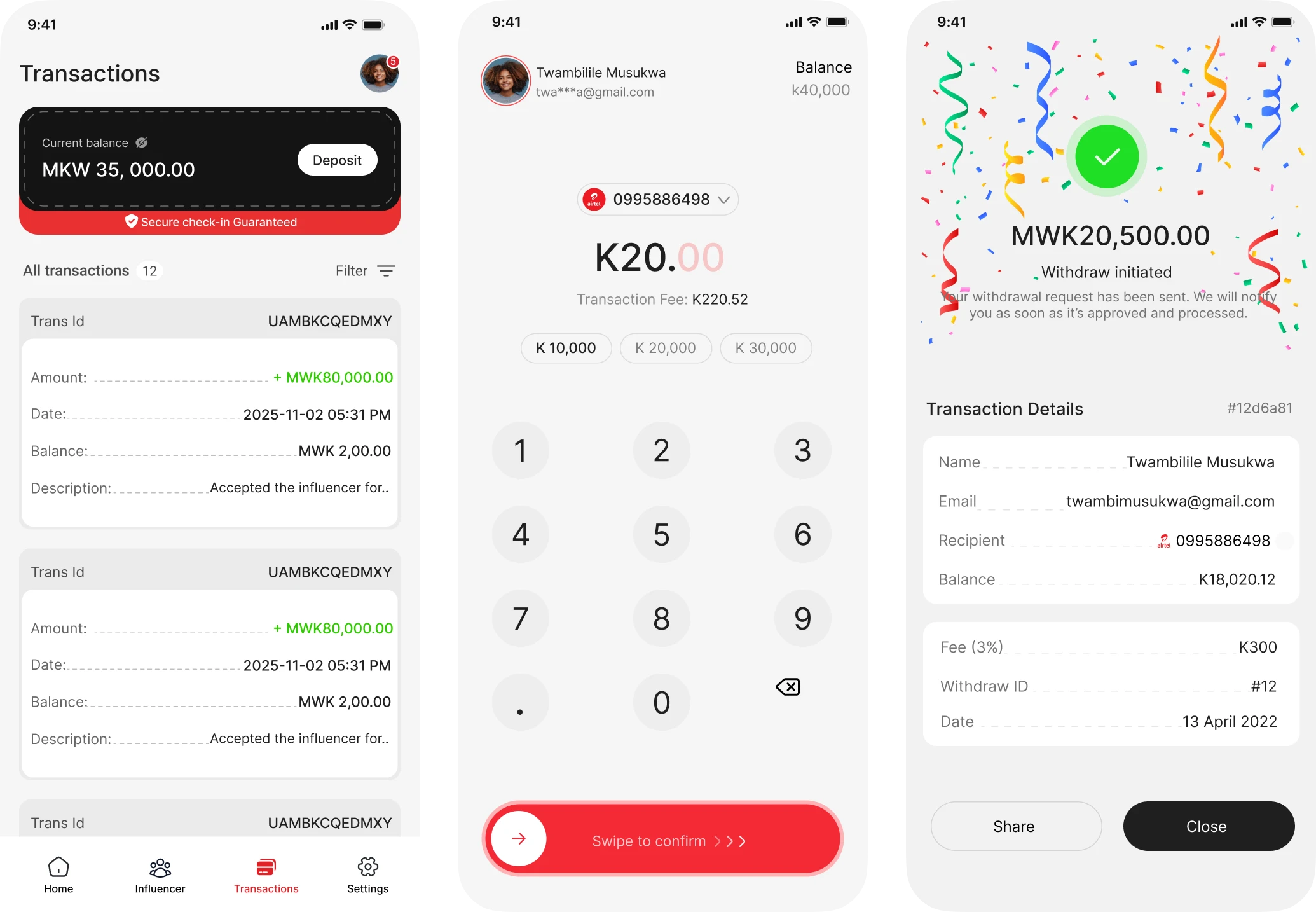
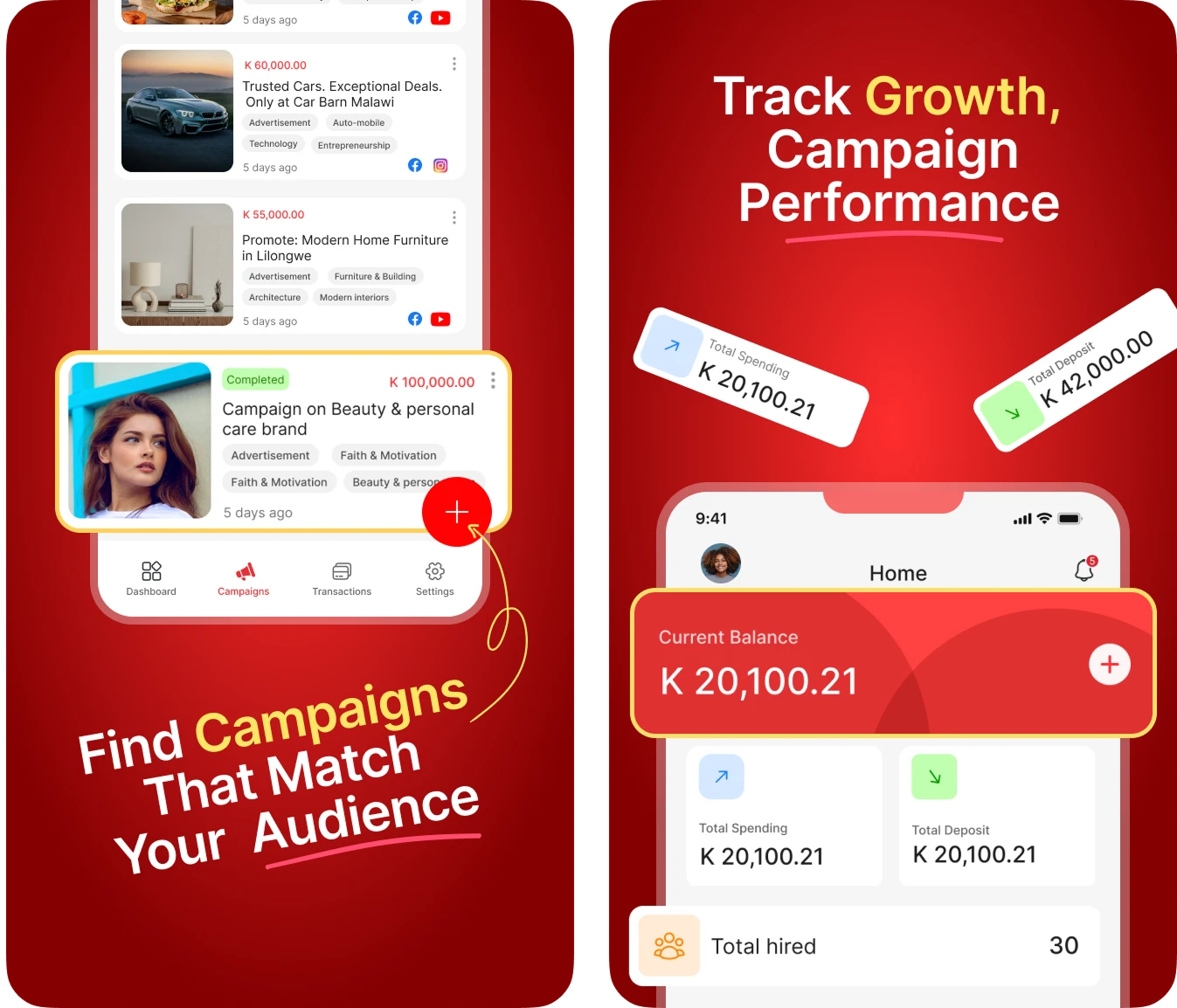
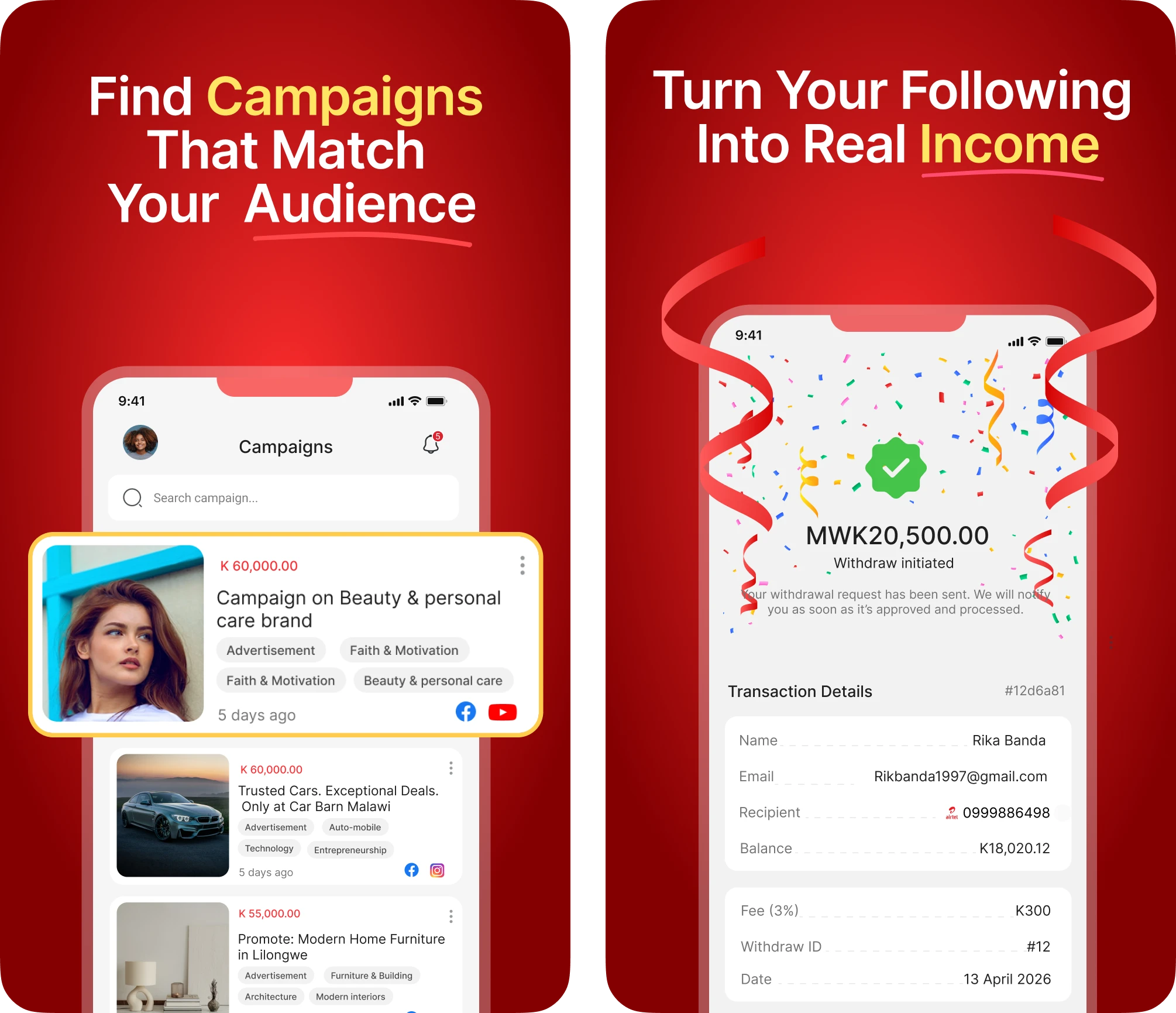
- Designing campaign discovery, wallet, and transaction screens.
- Improving navigation and form layouts.
- Ensuring the app felt local, simple, modern, and easy to use.
The Problem
Influencer marketing is growing in Malawi, but the process is still mostly informal. Many brands want to work with creators, but they do not always know where to find reliable influencers. At the same time, many influencers have audiences and talent, but they do not have a structured way to get discovered, apply for campaigns, or prove their value to brands.
The current process often happens through WhatsApp, direct messages, referrals, or personal connections — creating several compounding problems.
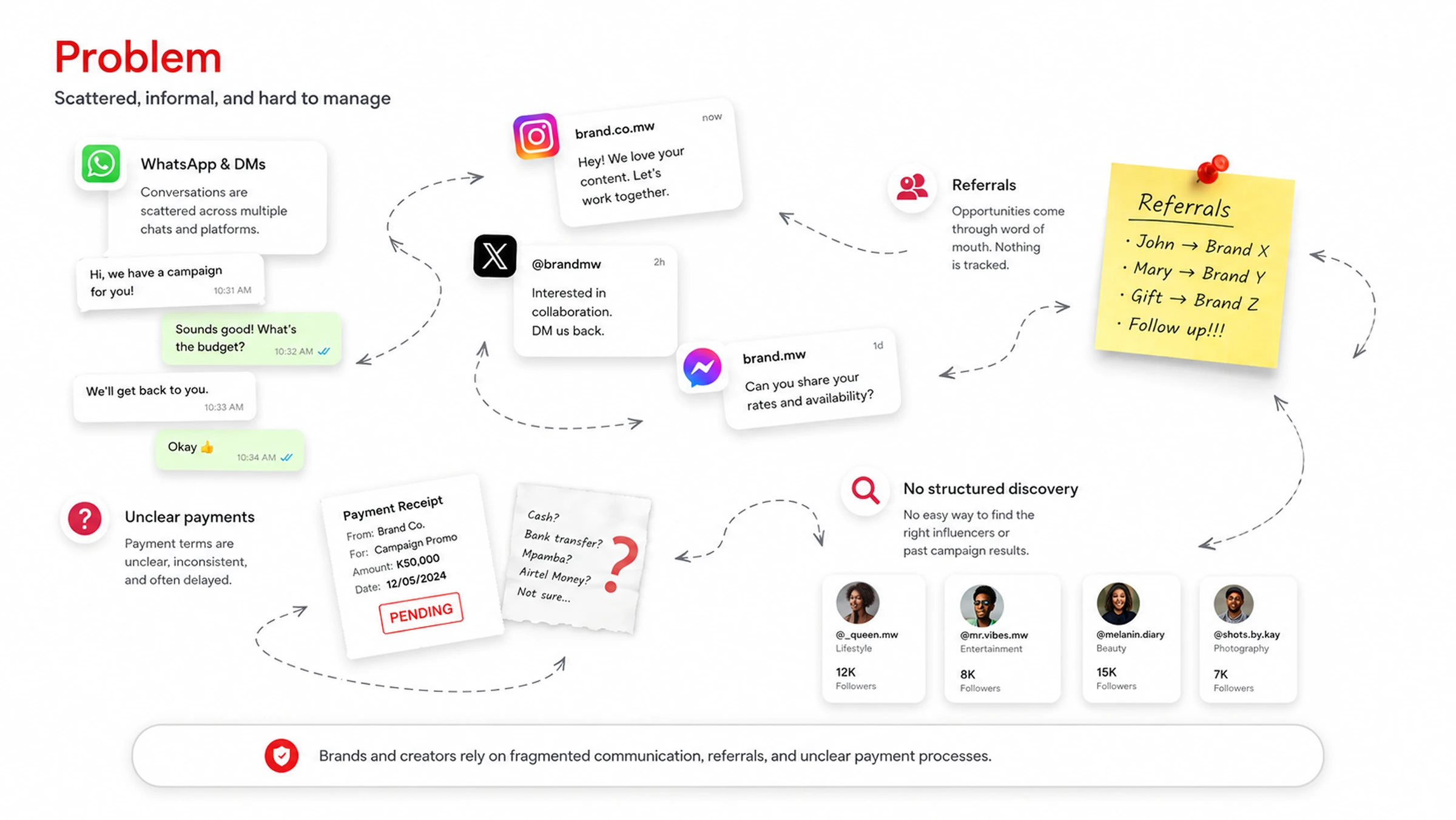
The informal influencer marketing landscape in Malawi
- Influencers struggle to find paid opportunities.
- Brands struggle to identify the right creators.
- Campaign communication becomes scattered.
- Payments are not always clear or confirmed.
- Influencer profiles are not standardized.
- Smaller creators are often overlooked due to lack of visibility.
Key Challenges
Challenge 1 — Dual audience, different goals
Designing an app that feels professional enough for brands, but still simple and friendly for everyday creators. Some users may not be highly technical, so the experience needed to feel familiar, direct, and easy to complete.
Challenge 2 — Two-sided platform
Influencers and brands have different goals, but they still need to interact within the same ecosystem. The design needed to support both without making the app feel complicated or fragmented.
Challenge 3 — Trust
Brands need to trust that creator profiles are real and useful. Influencers also need to trust that campaigns and payments are legitimate. Profile completion, social media links, wallet screens, and transaction confirmations became critical design areas.
Target Users
The platform serves two distinct user groups, each with different motivations and expectations:
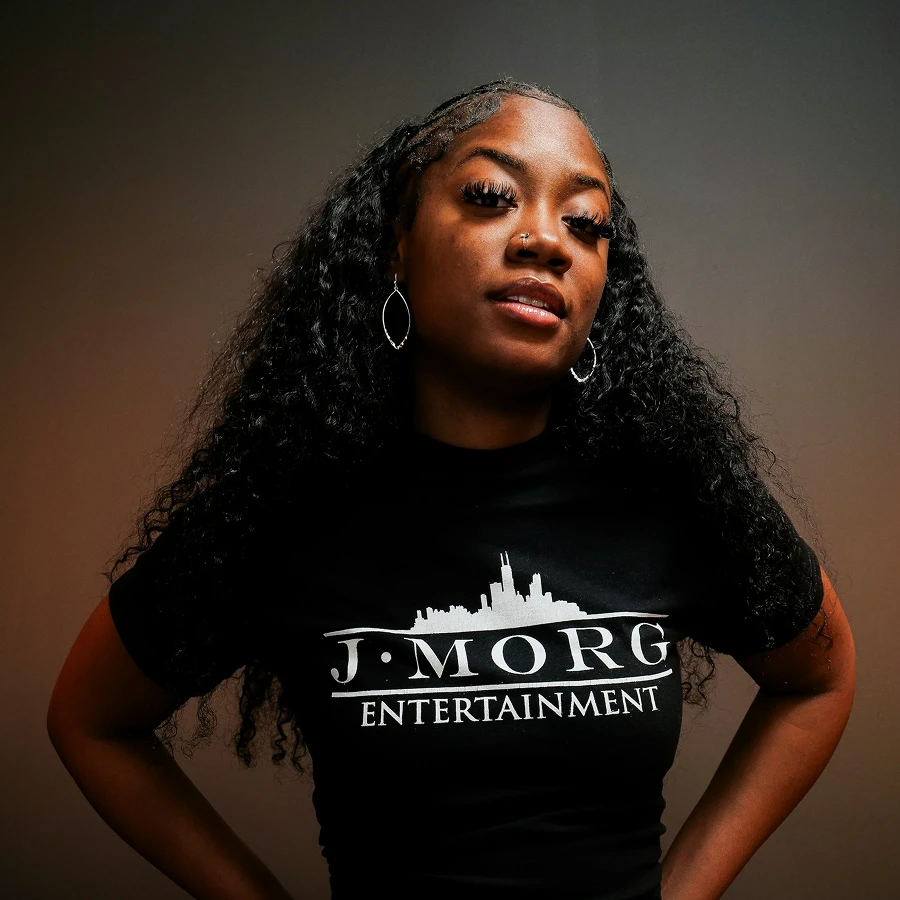
Creates lifestyle and fashion content on TikTok, Instagram, and Facebook. Has an active following but no reliable way to find brand deals.
Goals
- Find paid campaigns
- Get discovered by brands
- Show social profiles in one place
- Track payments and campaign history
Frustrations
- Brand deals are inconsistent
- Opportunities come through who you know
- Hard to prove value to businesses
- Payment terms sometimes unclear
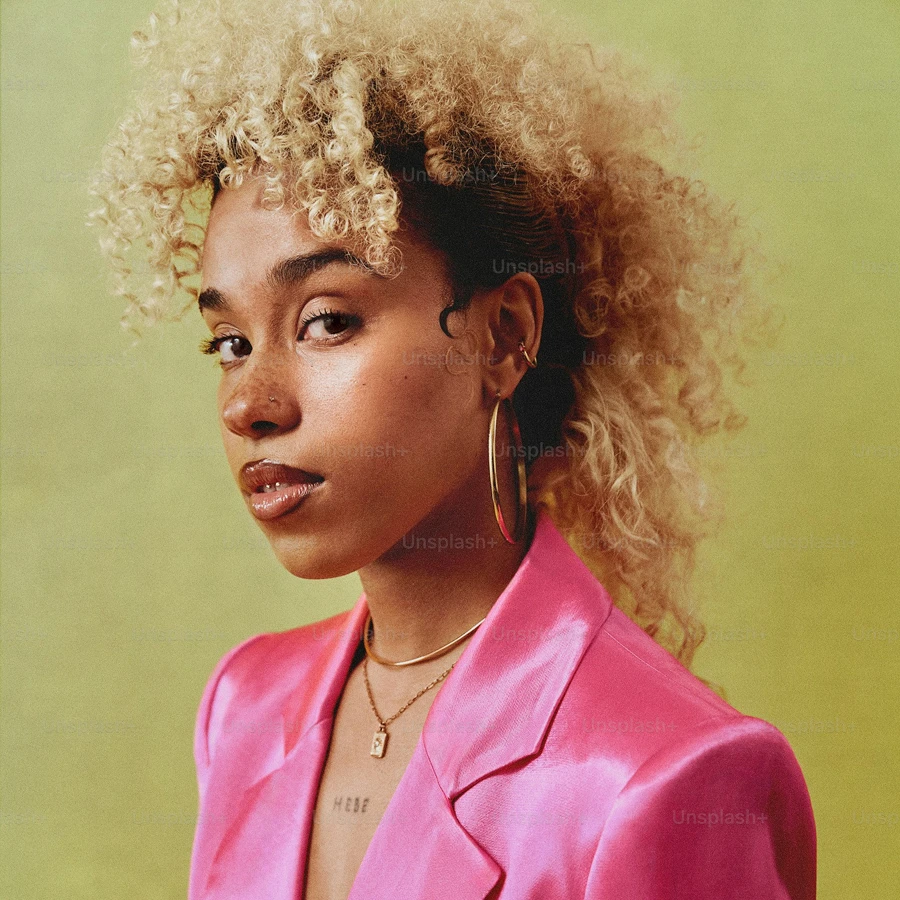
Runs a beauty and skincare shop. Wants to promote products through local influencers but struggles to find and compare suitable creators.
Goals
- Find trusted influencers
- Promote products affordably
- Compare creators quickly
- Manage campaign applications
Frustrations
- Hard to know which influencers are serious
- No simple way to compare creators
- Campaign communication is scattered
- No clear system for tracking collaborations
User Flow Summary
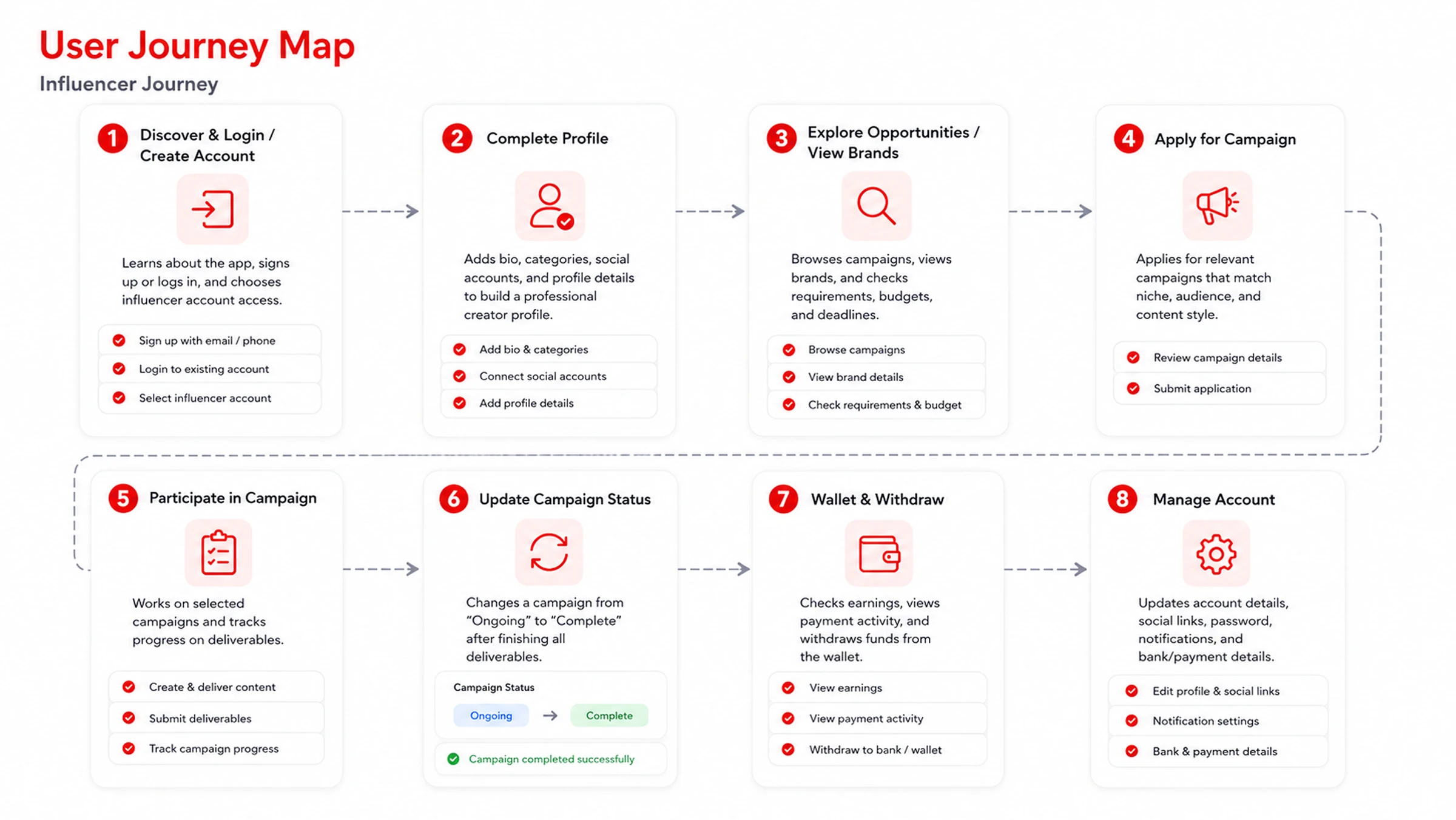
Influencer user journey map
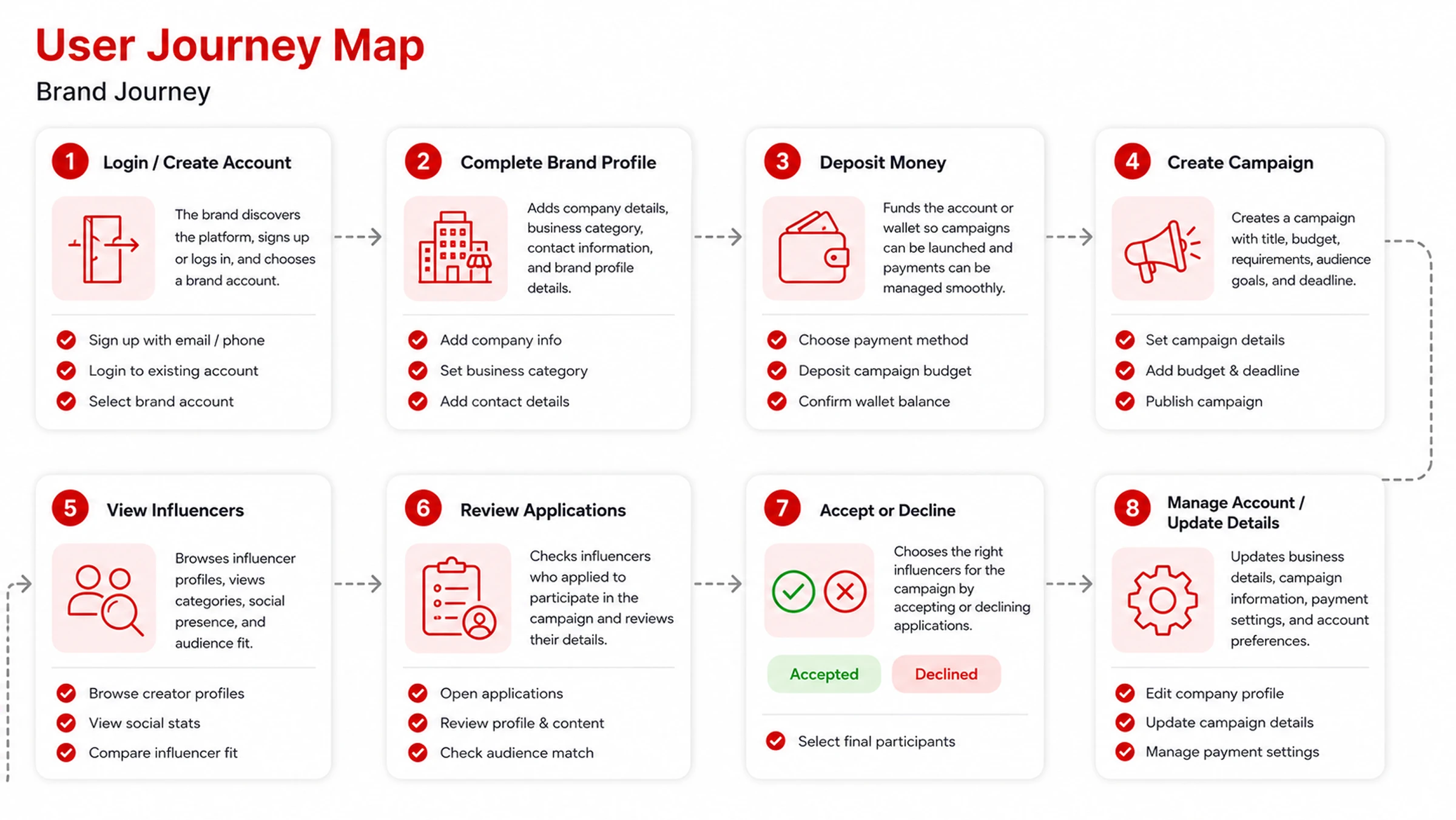
Brand user journey map
Visual Design Direction
The visual design uses a modern mobile-first style with a clean white background, rounded cards, red brand accents, and simple icons. The red primary color gives the app energy and confidence — it also helps important buttons stand out clearly.
Design choices:
- Red primary color for buttons, highlights, active tabs, and important UI elements.
- White and light grey backgrounds to keep the interface clean.
- Card-based layouts for campaigns, creators, wallet items, and transactions.
- Rounded input fields, profile cards, progress indicators, and category chips.
- Bottom navigation with familiar mobile patterns.
- Verified Pending Applied Completed — status labels for clarity.
Key UX Decisions
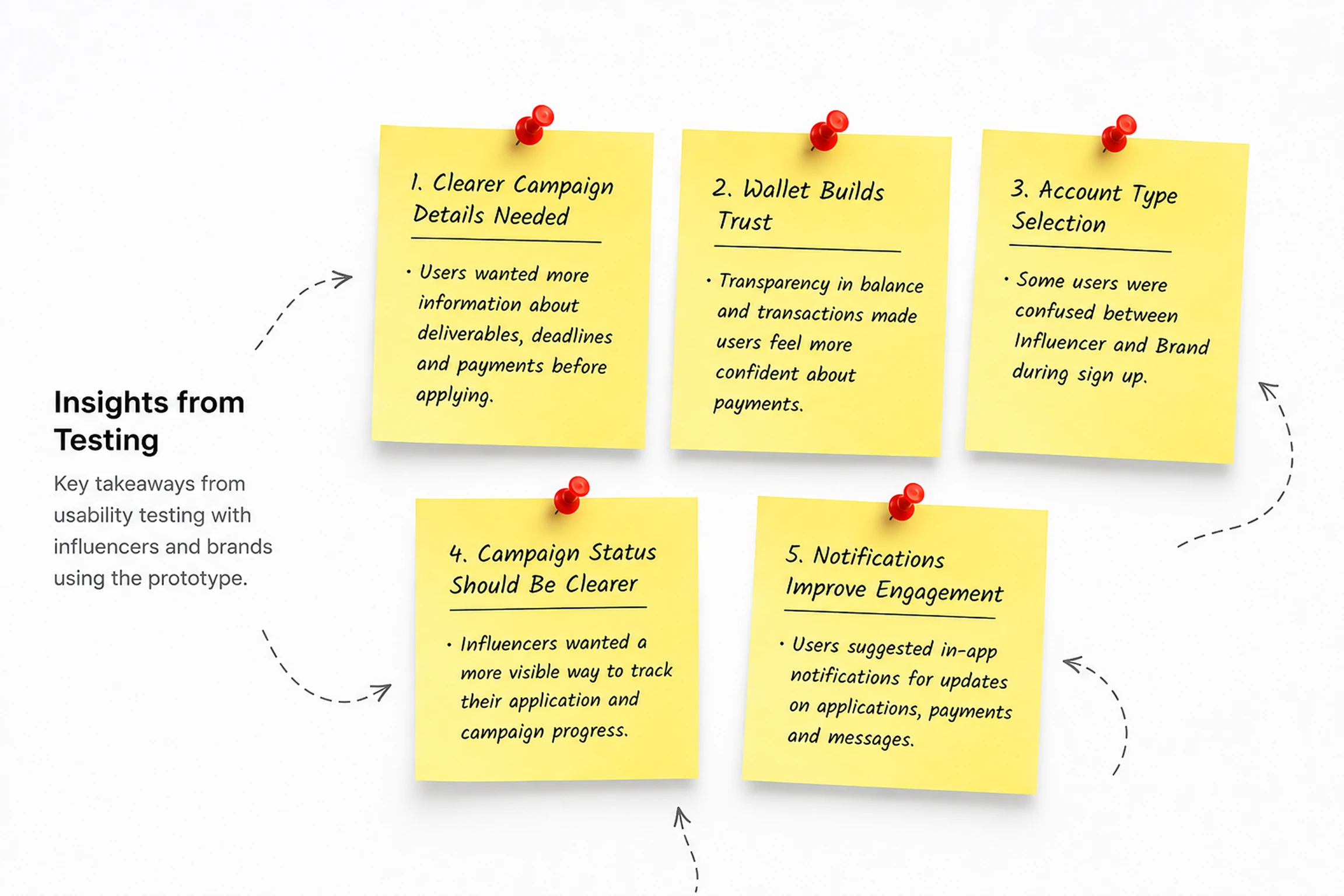
Insights gathered from early feedback and testing sessions
Success Metrics
The success of Influencer Malawi can be measured using both product and business indicators:
Final Outcome
The final design creates a strong foundation for a local influencer marketing platform. The app gives creators a professional way to present themselves and gives brands a better way to discover and work with influencers.
The interface is simple, modern, and easy to understand. Onboarding, category selection, social media linking, wallet management, campaign discovery, and profile screens make the product feel complete and practical.